Services offered by Tom Dobbs
Mole Assessment
Skin Cancer Treatment
Mole Assessment
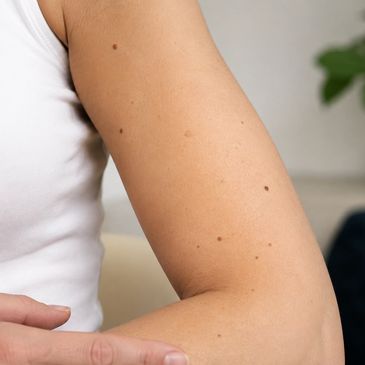
Tom provides a comprehensive mole assessment service and can advise on any that may need to be removed for further assessment.
Dermoscopy
Skin Cancer Treatment
Mole Assessment
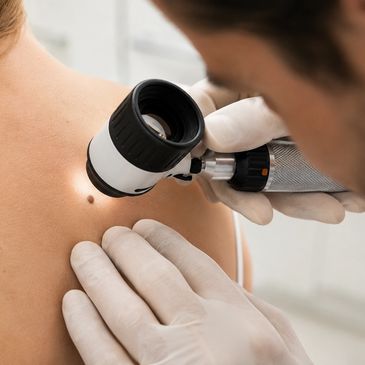
Dermoscopy is a simple, non-invasive way to examine the skin more closely using a handheld device called a dermatoscope. The instrument provides magnification and lighting, allowing details beneath the skin surface to be seen that are not visible to the naked eye. It is commonly used to assess moles, pigmented spots, and other skin changes, helping to identify features that may suggest skin cancer or reassure that a lesion appears benign. Dermoscopy can improve diagnostic accuracy and may reduce the need for unnecessary procedures.
Tom uses a dermatoscope routinely in all appointments.
Skin Cancer Treatment
Skin Cancer Treatment
Reconstruction with Skin Grafts and Skin Flaps
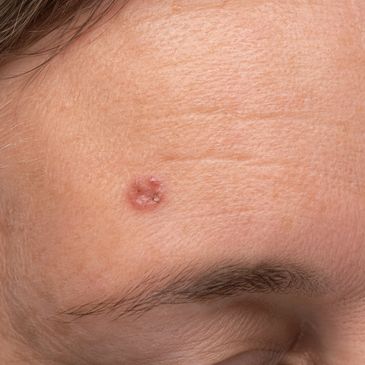
If you are diagnosed with a skin cancer Tom is able to offer full treatment of this in the private sector.
Most skin cancers can be easily treated with a small local anaesthetic operation. Sometimes a more involved procedure is required under general anaesthetic, with Tom having access to facilities for this at Nuffield, The Vale Hospital.
Reconstruction with Skin Grafts and Skin Flaps
Reconstruction with Skin Grafts and Skin Flaps
Reconstruction with Skin Grafts and Skin Flaps
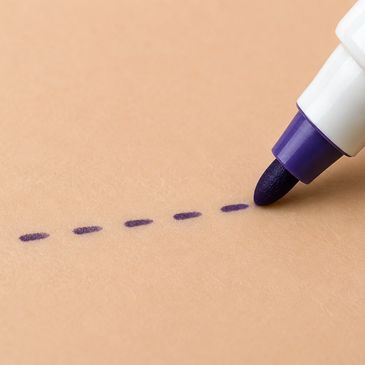
Sometimes when a skin cancer is removed the wound cannot be stitched up. Skin grafts and skin flaps are surgical techniques used to repair areas where skin has been removed, such as in skin cancer treatment. A skin graft involves taking skin from one area of the body (the donor site) and placing it onto the wound. A skin flap uses nearby skin and tissue that remain attached to their blood supply and is moved to cover the area.
Tom uses these techniques routinely in his practice and offers this service for patients in the private sector needing complex skin cancer reconstruction.
Sentinel Lymph Node Biopsy
Reconstruction with Skin Grafts and Skin Flaps
Sentinel Lymph Node Biopsy
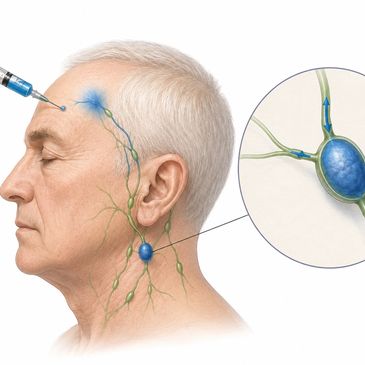
A sentinel lymph node biopsy is a procedure sometimes offered to people with melanoma to check whether cancer cells have spread to nearby lymph nodes. The “sentinel” node is the first lymph node that drains from the area where the melanoma started. During the procedure, a dye and/or tracer is used to identify this node, which is then removed and examined in the laboratory. The results can help determine the stage of the melanoma and guide further treatment or follow-up plans.
Tom provides this service for both head and neck and non-head and neck melanomas and can discuss with you the risks and benefits of the procedure as part of your melanoma care.
Lumps and Bumps
Reconstruction with Skin Grafts and Skin Flaps
Sentinel Lymph Node Biopsy
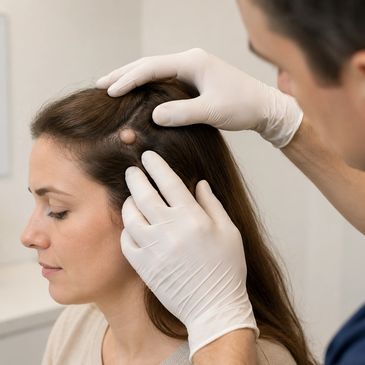
Not all skin lumps and bumps are skin cancer and many things are non-cancerous. Tom is able to clinically assess these and even if it is non-cancerous but you would like it removed he can perform this for you.